What To Know
- Address water entry before treating the interior.
- Physical cleaning, drying, and material decisions are separate steps.
- Monitor for renewed dampness after the work is complete.
In This Article
1. Address The Moisture Source
First establish why the interior became wet. A one-time spill needs a different response from water entering after every storm. A professional assessment can use the history and observed wet areas to direct the investigation; the stain's location alone may not identify the entry point.
Correct the source as part of the agreed plan so cleaned material is not repeatedly wetted. EPA's basic cleanup guidance emphasizes moisture control. This is general indoor guidance, not a vehicle repair procedure. Our water-under-carpet guide explains why concealed moisture matters.
2. Inspect The Material And The Layers Behind It
Identify which areas need work: upholstery, cushion material, carpet, padding, hard trim, or the exposed floor. Inspection may require appropriate interior access. Removing a seat can expose a floor area without revealing the underside of the carpet, so those are different inspection steps.
Decide what can be treated in place and what needs removal before cleaning. Vehicle fittings and connections require qualified handling; this is not a seat or electrical disassembly guide. Our seat-mold guide explains the surface-versus-cushion distinction.
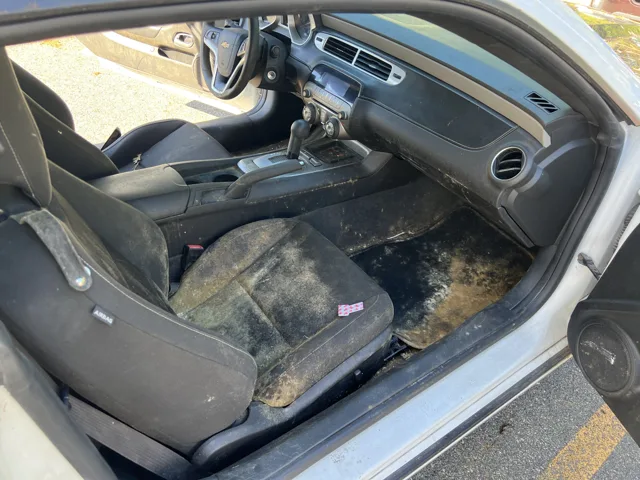
3. Physically Clean The Recoverable Areas
Cleaning needs to act on the affected surface, rather than only change the cabin's smell. A professional approach can include controlled collection of affected deposits, followed by material-compatible cleaning of accessible areas. Hard trim and exposed floor surfaces need a different approach from absorbent upholstery or padding.
Methods and products should suit the material and the vehicle, with precautions to limit disturbance and spread during the work. Do not improvise chemical mixtures or aggressively disturb moldy fabric. An air treatment cannot substitute for physically addressing the material carrying the problem, and a product name alone does not describe that work.
4. Dry The Accessed Layers
After cleaning and water removal, allow the areas being retained to dry. The plan should account for carpet backing, padding, and other accessed layers, rather than judge the entire floor by how its top surface feels. Drying an assembled cabin may leave areas inaccessible for assessment.
The appropriate access, equipment, and time depend on the condition. Our wet-interior drying guide explains that distinction. Mobile work can suit some conditions; deeper access and drying may need In-Shop Deep Remediation, a separate multi-day service in Pembroke, MA.
5. Replace Material That Cannot Be Restored
Cleaning is not always a reasonable way to retain every affected component. Mold can be difficult to remove from porous material, and EPA's linked guidance notes that replacement may be necessary. In a car, the specific decision requires assessment of the upholstery, padding, or other component involved.
Agree on replacement before additional work is performed. Confirm what will be removed, what compatible replacement is required, and whether parts and fitting are included. A material's improved appearance does not by itself establish that it is suitable to reinstall.
6. Inspect, Reassemble, And Watch For Recurrence
Before reassembly, review the accessed areas and the work performed. The completion explanation should identify what was cleaned, dried, retained, or replaced, and any outstanding repair. Reassembly should follow the vehicle's requirements, rather than a generic blog checklist.
Keep the work record and note any renewed dampness, visible spots, or returning odor. Record whether these appear after rain or in a particular area. Our guide to recurring car mold helps organize those observations. Appearance and smell alone do not provide health clearance or a guarantee against future growth.
Common Questions
Is Killing Mold The Same As Removing It?
No. A treatment claim does not explain whether affected deposits or damaged materials were physically addressed. Ask what was cleaned, removed, dried, or replaced.
Can I Clean Every Affected Material The Same Way?
No. Hard surfaces, upholstery, cushions, carpet, and padding need different assessments. The method must fit the material, access, and condition.
Does Every Moldy Car Need Shop Work?
No. Mobile assessment and suitable treatment may fit accessible work. More extensive access and drying can require a separate multi-day shop plan.
Sources And Further Reading
General indoor mold guidance informs moisture and material principles. Vehicle-specific documents apply to the models they identify; inspection determines what applies to your car.