What To Know
- Match the drying plan to the water source.
- Check hidden layers before calling the job complete.
- Deep interior drying can require several days.
In This Article
Check Safety Before Switching Anything On
For a vehicle affected by flooding, do not start the engine or drive before qualified mechanical and electrical assessment. NHTSA's flood-vehicle guidance puts that assessment ahead of startup. Running the engine to warm the carpet is not an appropriate first step when water exposure is unknown.
Do not improvise with household heaters, damaged extension cords, or electrical equipment placed in wet footwells. If the issue is a known small spill in an otherwise unaffected car, you can discuss proportionate first steps without treating the whole vehicle as flood damaged.
Remove The Easy Moisture, Not Vehicle Components
For a small spill of known clean water, gently blot accessible moisture with clean towels and remove a loose removable mat to dry separately. Keep additional rain out. Stop if you discover pooling, visible growth, or an area that needs trim or seat removal to reach.
These limited steps are not a substitute for checking saturated layers. Do not unbolt seats, unplug under-seat connectors, or pull apart the dashboard to follow a drying tutorial. Vehicle-specific access work belongs in an agreed professional plan. Record what you did so the person assessing the car understands its condition.
Separate Extraction From Complete Drying
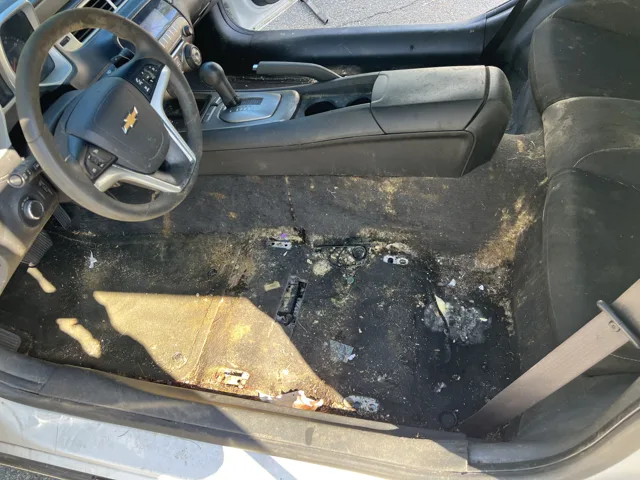
Water extraction can reduce accessible liquid, while drying addresses what remains in affected materials. Ask how the backing and padding will be assessed instead of judging success by the carpet pile alone. EPA carpet guidance notes that backing and padding matter as well as the carpet face; it concerns buildings, but the distinction is relevant when discussing vehicle layers.
Our guide to Wet Car Carpet Padding After A Leak explains why a surface that feels better may still leave an unresolved interior issue.
Treat Quick Action As A Priority
EPA guidance recommends drying wet materials promptly, commonly within 24–48 hours. That broad indoor guidance is a reason to act, not a promise that your car remains mold-free until a precise hour or that every interior can be dried within that period.
Tell the assessor when the water entered, when you first noticed it, and whether it has happened before. Drying duration and treatment needs depend on the affected materials and access. A time estimate should follow that information instead of being copied from a universal online timetable.
For the timing behind prompt action, read how fast mold can grow after a car gets wet, including the limits of a fixed countdown.
Know When Mobile Work Becomes Shop Work
Mobile service is the starting point for suitable car-interior assessments and treatment across Boston and Greater Boston. Some wet interiors need a setting that allows more access, ongoing drying, and a separate parts or repair discussion. Read our Car Water-Damage Cleanup page to understand the assessment scope.
When extensive work is required, In-Shop Deep Remediation is a multi-day appointment in Pembroke, MA. Plan for the vehicle to stay with the shop; do not book it as an hour-long errand.
Ask How Drying Will Be Checked
Ask which areas will be accessible, which materials may need replacement, and how the affected layers will be assessed before reassembly. Installed carpet limits what a surface photograph can establish underneath it.
Also agree on who is handling the leak. Our Vehicle Assessment Process starts with condition and scope, because returning a dried interior to an active leak can restart the problem after the next rain.
Common Questions
Will Leaving The Windows Open Dry Everything?
It may help accessible surfaces under suitable conditions, but it does not establish that backing, padding, or covered areas are dry. Keep the vehicle protected from further rain.
Can I Dry The Carpet With A Household Heater?
Do not improvise electrical or heating equipment in a wet cabin. Discuss a suitable drying setup with a professional, especially if the water source or vehicle safety is uncertain.
How Long Does Shop Drying Take?
Deep shop service is multi-day. The actual schedule depends on access, affected materials, repair or replacement needs, and the agreed treatment plan.
Sources And Further Reading
General indoor mold guidance informs moisture and material principles. Vehicle-specific documents apply to the models they identify; inspection determines what applies to your car.