What To Know
- Use 24–48 hours as a reason to act, not a countdown.
- Visible growth can appear later than the initial wetting.
- Hidden material may stay wet after the surface dries.
In This Article
What The 24–48-Hour Guidance Actually Means
The EPA's home guidance recommends drying water-damaged areas and items within 24–48 hours to help prevent mold growth. It encourages prompt action rather than waiting for contamination to become visible.
Cars have different material assemblies, limited access, and sometimes water-damaged electrical systems. Treat the guidance as a general moisture-control principle. It cannot certify a car as unaffected at 23 hours or establish that a particular floor will show mold at 48 hours.
The Wetting Time May Be Earlier Than Discovery
Finding damp carpet this morning does not necessarily mean it became wet overnight. A slow leak can affect covered layers before an owner notices the surface. A stored vehicle may have an even less certain history.
Record the last known dry condition, recent rain, previous spills, and any earlier odor. Do not reset the clock to the day you discovered the problem. If the history is unclear, tell the assessor rather than choosing a reassuring estimate that could overlook prolonged wetness.
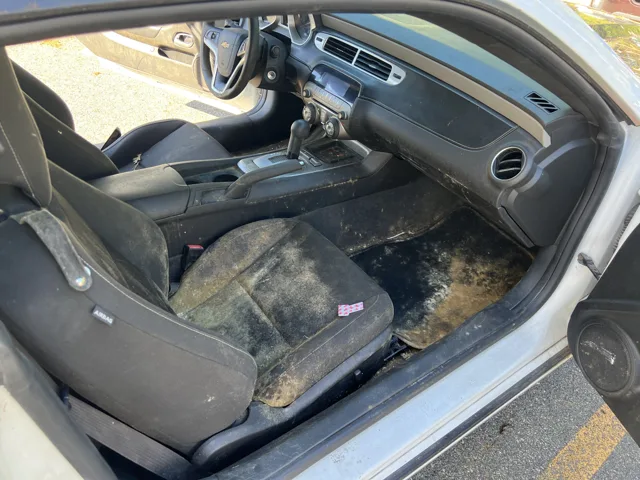
Conditions Inside The Cabin Matter
The amount of water, surrounding temperature, airflow, and the material involved affect how long an interior remains damp. A wet removable mat drying outside is not a useful substitute for assessing covered cushioning or insulation inside the car.
Our guide to wet carpet padding explains why those layers deserve separate attention. A warm-looking or sunny day does not establish that the assembly dried throughout. The relevant question is the condition of the material that actually became wet.
Visible Mold Is Not A Useful Waiting Signal
You do not need to see a patch before arranging drying and investigation. A water event already provides a reason to act. Conversely, visible marks need assessment rather than an assumed timeline based on their size or color.
The EPA describes moisture as essential to mold growth. For the owner of a wet vehicle, the practical response is to address the wet condition and source promptly, whether or not the surface has changed yet.
A Flood Adds Questions Beyond Mold Timing
Floodwater can affect systems that interior cleaning does not evaluate. Water height, duration, type, and the components reached matter to the automotive inspection and insurance process. Do not make a drive-or-clean decision solely by estimating the chance of mold.
NHTSA's flood-damaged vehicle guidance advises owners to seek appropriate assistance and addresses the additional risks of damaged electric vehicles. Our flooded-car assessment guide separates interior restoration from a decision about overall vehicle condition.
Make The First Call With Useful Details
Share the vehicle, water source if known, estimated duration, affected locations, and whether water is still present. Photos can help the team prepare, although they cannot establish the condition of covered materials. Keep any leak-repair and insurance information available.
CarMold Boston can discuss mobile water-damage cleanup where suitable. When deeper access and extended drying are needed, shop work is a separate multi-day service in Pembroke, MA. Our prevention guide explains what to watch after the initial response.
Common Questions
Will Mold Definitely Grow After Two Days?
No. The 24–48-hour recommendation is general indoor drying guidance, not a precise vehicle growth deadline. Conditions and materials vary, so act promptly rather than wait for a predicted hour.
Can Mold Already Be Present Before I Notice Wet Carpet?
The wetting history may be longer than the visible dampness suggests. An inspection is needed to establish the condition; discovery time does not necessarily identify when water first entered.
Does A Dry Surface Mean The Risk Is Gone?
A dry upper surface does not prove that backing or padding is dry or that a recurring leak is fixed. The assessment needs to account for the affected layers.
Sources And Further Reading
General indoor mold guidance informs moisture and material principles. Vehicle-specific documents apply to the models they identify; inspection determines what applies to your car.