What To Know
- Vehicle safety comes before interior cleaning.
- Document the water before disturbing damage.
- Flood cleanup and roadworthiness are separate decisions.
In This Article
Decide What You Mean By Flooded
Explain whether water rose around a parked car, the vehicle passed through standing water, or rain leaked into the cabin while the car remained on dry ground. If the depth or route is unknown, say so. That uncertainty is useful information, not something to fill in with a guess.
Do not use the absence of a warning light as clearance to drive. NHTSA advises assessment before starting a flood-damaged vehicle because damage may be hidden. Arrange appropriate transport after discussing the vehicle with a qualified repair professional.
Keep Yourself Out Of The Water
If floodwater is still present, prioritize a safe location and follow local instructions. Do not enter water to retrieve mats or take interior photos. The CDC warns that floodwater can contain electrical hazards, sewage, chemicals, and debris. It should not be treated as clean rainwater simply because a storm caused it.
Tell whoever assesses the car whether the water came from a street, river, coastal surge, or an unknown source. That information affects the cleanup discussion. It also helps avoid treating a contaminated event as an ordinary upholstery spill.
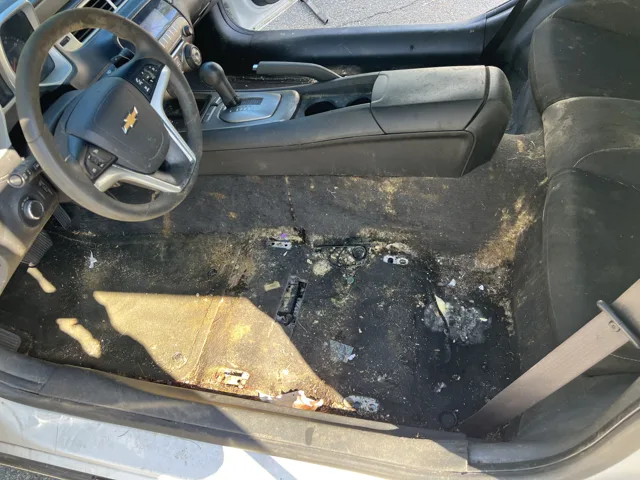
Create A Simple Record
From a safe location, record when the event happened, the vehicle's location, the highest visible water line, and how long the vehicle may have been wet. Take exterior and interior photos only where access is safe. Keep your insurer informed if you intend to make a claim, and ask about documentation before discarding affected items.
Separate what you saw from what you suspect. A damp mat is an observation. Saying the engine stayed dry is an assumption unless it was checked. Clear notes give repair and interior specialists a better starting point than a broad statement that the car got wet.
Stop The Source And Assess The Materials
A rain-related cabin leak needs its own diagnosis. Cleaning the floor cannot resolve water entering through an unrepaired route. See Why Is My Car Carpet Wet? for the timing clues that help distinguish rainfall from other sources.
For the interior, ask which parts were wet, which are accessible, and which need removal or replacement. A top-down carpet photo cannot answer those questions. Our Car Water-Damage Cleanup service focuses on the interior scope after the safety and repair requirements have been established.
Do Not Expect An Overnight Reset
A fresh leak affecting a limited area may be suitable for a mobile assessment. Significant saturation, hidden layers, or extensive interior access can require multi-day shop work. Our Pembroke, MA, shop service is booked by appointment, with the scope discussed before drop-off.
A return date should account for the work required rather than an arbitrary promise that every wet vehicle will be ready tomorrow. Read How To Dry Out A Wet Car Interior for the difference between a drier surface and a completed drying plan.
Ask Two Separate Completion Questions
First ask whether the mechanical and electrical concerns have been evaluated by the appropriate repair professional. Then ask what was done to the interior: which materials were retained or replaced, how moisture was addressed, and whether the leak repair needs further confirmation.
A clean-looking cabin is useful, but it is not a safety certificate or proof that every hidden component was unaffected. If the vehicle experienced substantial flooding, read Can A Flooded Car Be Saved? before treating interior cleanup as the decision to keep the car.
Common Questions
Can I Drive A Flooded Car To Your Appointment?
Do not drive an unknown flood-damaged vehicle before qualified mechanical and electrical assessment. Discuss safe transport with the repair professional handling the vehicle.
Is Rainwater In A Footwell The Same As Street Flooding?
No. Describe how the water entered. Street flooding can raise safety and contamination concerns beyond an ordinary rain-related cabin leak.
Does CarMold Boston Decide Whether My Car Is A Total Loss?
No. The interior scope is separate from mechanical assessment, insurance coverage, and a repair or total-loss decision.
Sources And Further Reading
General indoor mold guidance informs moisture and material principles. Vehicle-specific documents apply to the models they identify; inspection determines what applies to your car.