What To Know
- Do not wait for a smell before addressing wet materials.
- Drying needs to account for the affected layers.
- Prevent another wetting event by addressing the source.
In This Article
Work Out What Kind Of Water Event Occurred
A small spill, a rain-soaked open window, and floodwater entering a vehicle are not interchangeable. Record when it happened, how high the water reached, and which sections were affected. Photograph the condition before cleanup where it is safe to do so.
If the vehicle was flooded, arrange qualified automotive and insurance advice before treating the issue as an interior-cleaning job. Our guide to a car flooded after rain explains why cleaning and vehicle safety need separate consideration.
Act Promptly Without Treating A Clock As A Guarantee
The EPA recommends drying water-damaged areas and items within 24–48 hours in its home guidance. That is a useful reason for urgency, not a promise that every car will develop visible mold at a fixed hour or remain unaffected until then.
Do not spend the first day waiting to see whether an odor appears. Arrange appropriate cleanup and assessment early, especially if the floor is saturated or the duration of wetness is unknown.
Remove Ordinary Wet Items, Then Assess The Interior
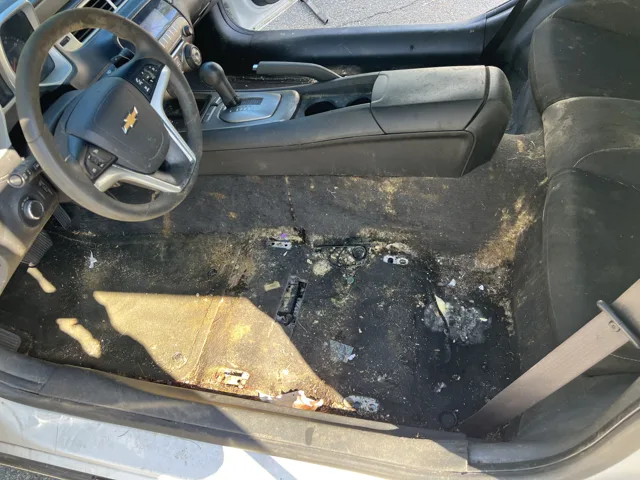
For a minor clean-water incident without visible mold or vehicle-safety concerns, remove loose wet towels and removable mats so they are not left holding moisture against other materials. Keep the vehicle protected from more rain while you arrange a suitable drying approach.
Do not assume the improvement in a removable mat tells you the floor is dry. Avoid improvised heaters, chemical mixtures, or electrical equipment around water. A saturated interior needs a plan for its actual construction and the conditions in which drying will occur.
Include The Layers You Cannot See
Ask whether water reached the carpet backing, padding, cargo lining, or seat cushioning. Access may be needed before the condition of these materials can be established. Removing a seat can expose more carpet while still leaving layers beneath it covered.
Our wet-interior drying guide explains why surface drying has limits. A useful assessment identifies the wet materials first, then explains how drying or replacement decisions will be made without improvising around vehicle wiring or restraint components.
Stop The Next Water Event
If water arrived through an ongoing leak, the drying work needs to be coordinated with diagnosis and repair. Otherwise, the next storm may wet the same area. Keeping the car under cover can limit new exposure while the cause is investigated, but it does not prove a repair.
Toyota's water-intrusion odor guidance requires repair of the identified source for its covered vehicles. Our water-leak inspection service information separates that investigation from interior cleanup.
Watch For Changes After The Initial Cleanup
Check whether the interior becomes damp again after rain and whether a persistent odor or new visible marks develop. Keep a record rather than repeatedly covering the smell. If suspected mold is already present, the job moves beyond prevention and needs a material-specific assessment.
CarMold Boston can discuss mobile interior water-damage cleanup when suitable. Deep access or retained wet layers may require multi-day In-Shop Deep Remediation in Pembroke, MA. Confirm the scope and any separate repair needs before the work begins.
Common Questions
Can I Just Leave The Windows Open?
Ventilation may help in suitable weather, but it does not establish that hidden material is dry and can allow more rain in. Saturated layers need an appropriate drying assessment.
Is The Car Fine If There Is No Smell Yet?
Not necessarily. A wet interior deserves prompt attention before visible growth or odor develops. The affected layers and vehicle-safety concerns should determine the response.
Will A Moisture Absorber Dry A Soaked Floor?
Do not rely on a small passive absorber to resolve saturated carpet or padding. It does not remove bulk water, expose covered layers, or repair an ongoing leak.
Sources And Further Reading
General indoor mold guidance informs moisture and material principles. Vehicle-specific documents apply to the models they identify; inspection determines what applies to your car.