What To Know
- Surface dryness does not establish hidden-layer dryness.
- Seat removal and carpet removal show different areas.
- Agree on access and material decisions before treatment.
In This Article
Describe The Evidence You Actually Have
Useful observations include water emerging when you press an accessible area, recurring dampness after rain, or a persistent smell after the surface has been cleaned. Explain exactly what you noticed and when. Do not label a stain as hidden mold unless the affected material has been assessed.
A photo of the cabin is a starting point, not a full diagnosis. A wet mat, a top carpet stain, and visible pooling beneath a professionally exposed edge provide different information. Tell the assessor whether any interior access has already taken place and who performed it.
Why The Layers Change The Plan
The floor assembly can include carpet, backing, padding, and other vehicle-specific materials. It is the affected assembly, not just the visible pile, that needs consideration. EPA's carpet guidance specifically identifies backing and padding as drying concerns. Although written for buildings, it helps explain why a surface-only assessment is incomplete.
Read Car Carpet Padding Wet After A Leak for the material decisions that follow. Ask which layers are separate, which can be accessed, and whether the manufacturer sets replacement requirements.
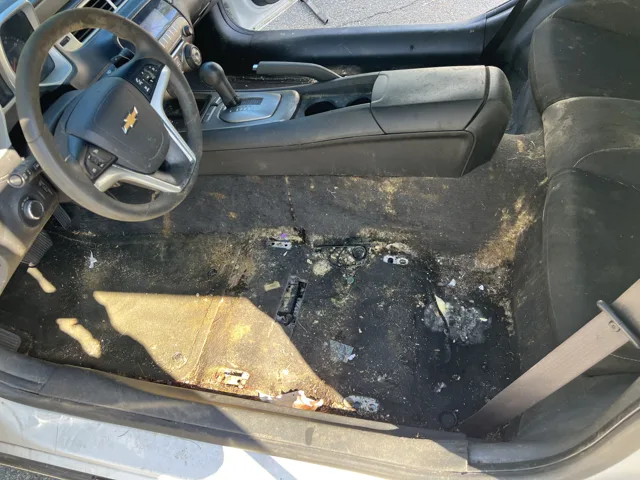
What A Seat-Removal Photo Does And Does Not Show
Removing a seat can improve access to floor areas and mounting points, but it does not automatically remove the carpet. If the carpet remains installed, its underside and padding remain hidden in that view. This distinction matters when comparing photos or discussing the work you need.
Our Interior Floor Access Photos show visible interior areas with that limit in mind. Use them to understand access, not to infer that all hidden layers were dry or that a particular stain identifies the leak source.
Keep The Leak Question Open Until It Is Checked
Water may have come from a one-time spill, a rain-related entry route, or another vehicle system. Repeated dampness makes the timing especially useful: does it return after rainfall, washing, or normal driving? Save any repair invoice and note whether the symptom continued afterward.
For diagnosis of an ongoing route, explore Car Water Leak Inspection. Interior cleanup should be coordinated with that work. A new fragrance or freshly vacuumed carpet cannot establish that the next rain will stay outside the vehicle.
Agree On Access Before Agreeing On Results
Ask what needs removal, how the vehicle-specific access will be handled, and what may require replacement. Do not remove seats or disconnect under-seat wiring yourself to reach wet materials. Those steps involve vehicle components that need the correct procedures.
Toyota's Water-Intrusion Odor Bulletin describes inspection and replacement of specified moisture-affected soft parts for covered vehicles. That is one manufacturer's approach, not a rule that every carpet can be saved or every wet interior needs identical work. Ask what applies to your model.
Plan For Deeper Work When The Condition Requires It
CarMold Boston offers mobile assessments and treatment where the condition and access are suitable. Hidden saturation or extensive access may instead need In-Shop Deep Remediation, a multi-day appointment in Pembroke, MA. Confirm the expected scope and transport arrangements before drop-off.
If the moisture followed substantial flooding, mechanical and electrical assessment must precede starting or driving the vehicle. For a cabin leak, the practical next step is to document the condition, arrange access, and decide what can be treated. Both paths begin with inspection rather than a blanket guarantee.
Common Questions
Can Water Stay Under Carpet That Feels Dry?
Yes, surface feel does not establish the condition of backing or padding. An assessment needs to address the affected layers and access limits.
Does Removing The Seat Expose The Carpet Underside?
Not necessarily. It exposes areas previously covered by the seat, but the carpet and padding may still be installed and out of view.
Will Every Wet Carpet Need Replacement?
No universal answer fits every vehicle. Material condition, water source, duration, access, and model-specific guidance determine the replacement discussion.
Sources And Further Reading
General indoor mold guidance informs moisture and material principles. Vehicle-specific documents apply to the models they identify; inspection determines what applies to your car.