What To Know
- Document the affected areas before cleaning.
- Find the moisture source as well as the visible mold.
- Wet padding or extensive contamination may need deeper access.
In This Article
Start With A Record Of The Problem
Take clear photos from outside the vehicle where practical. Capture the seat, carpet, door opening, or cargo area involved, along with a wider view showing its location. Note when you first noticed the problem, whether it followed rain, and whether the vehicle had been parked for weeks.
Tell the assessor about recent spills, open windows, windshield work, or previous leak repairs. Those details help distinguish a single wetting event from an ongoing problem. Avoid brushing or disturbing suspected mold just to make a photograph clearer.
If odor is the first clue, our musty car smell guide explains how its timing can help separate cabin moisture from a vent-related concern.
The Visible Spot May Not Show The Whole Extent
A mark on a seat and a soaked cabin floor call for different investigations. Seat seams can hide affected material, while carpeting may cover damp backing or padding. A tidy-looking surface does not establish that the layers beneath it are dry.
Our Mazda interior photo set shows photographed seat and cabin conditions. It provides useful visual context, but photographs alone cannot identify the moisture source or establish how much hidden material needs attention.
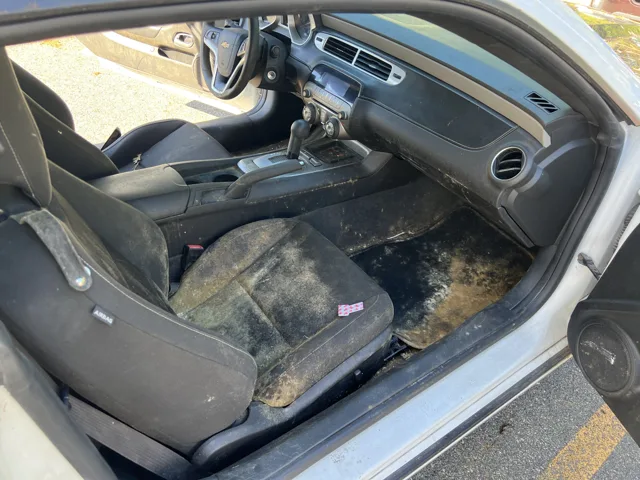
Find Out Why The Interior Became Damp
Think about the timing: after heavy rain, after using the air conditioning, following a spill, or after storage. A recurring wet patch deserves a leak investigation rather than repeated shampooing. Water can travel, so the wettest floor area is not necessarily the entry point.
Toyota's water-intrusion odor bulletin requires the leak source to be identified and repaired alongside odor remediation for the vehicles it covers. That vehicle-specific guidance supports treating moisture diagnosis as part of the plan.
Choose The Plan By Material And Access
Hard trim, textile upholstery, carpet backing, and seat foam cannot automatically receive the same treatment. The EPA's general cleanup guidance explains that mold in porous materials can be difficult to remove and some materials may need replacement. It is building guidance, not a vehicle repair specification; material condition and manufacturer instructions still matter.
Ask which areas will be cleaned, which will be inspected, and what happens if deeper contamination is found. A useful scope explains those decisions before work begins.
Mobile Service Or A Multi-Day Shop Visit?
Mobile assessment and suitable treatment can be convenient when the affected areas are accessible and the vehicle can be worked on at your location. It should not be sold as a universal answer to every contaminated interior.
If seats, carpet layers, or other components need deeper access, the vehicle may need In-Shop Deep Remediation. This is a multi-day service by appointment in Pembroke, MA. Drying, inspection, material decisions, and reassembly need time that a driveway visit may not provide.
What To Ask Before Booking
Ask how the provider decides between accessible cleaning and interior disassembly, how leak repair fits into the work, and how unresolved concerns will be communicated. Also ask what is excluded: cleaning an interior does not certify flood-damaged electronics or guarantee the removal of every airborne spore.
Our guide to professional car mold removal explains the scope questions in more detail. CarMold Boston focuses on vehicles, with 15 years of combined automotive experience and monthly training on handling mold inside cars.
Common Questions
Can I Tell What Kind Of Mold It Is From A Photo?
A photograph can help show the location and visible extent, but appearance alone does not reliably identify a mold species or determine an individual's health risk.
Do All Moldy Cars Need To Go To The Shop?
No. Suitability depends on the affected materials, moisture, and access required. Hidden wet layers or extensive contamination can make multi-day shop work more appropriate.
Should I Clean It Before An Assessment?
Document the original condition first. Avoid disturbing extensive suspected mold or soaking materials with a cleaner while you are arranging a suitable assessment.
Sources And Further Reading
General indoor mold guidance informs moisture and material principles. Vehicle-specific documents apply to the models they identify; inspection determines what applies to your car.