What To Know
- Surface dryness does not establish that padding is dry.
- Recurring dampness needs a moisture-source investigation.
- Removing a seat is different from lifting the carpet.
In This Article
Understand The Layers Beneath Your Feet
Many vehicle floors contain a molded carpet assembly over cushioning or sound-control material, with the metal floor below. Construction varies: some layers are bonded together, while others are separate. The way a particular assembly holds water affects both inspection and drying.
Water does not have to stay at the visible entry point. It can collect in lower areas or reach neighboring sections. That is why water beneath the carpet deserves attention even when the upper fibers seem almost normal.
Clues Worth Reporting
Useful observations include carpet that becomes damp after rain, condensation that keeps returning, staining at lower trim, and an odor that persists after removable mats have dried. A history of a soaked floor is relevant even if the owner cannot see growth today.
None of these clues proves hidden mold on its own. Spills, dirt, and other odor sources can overlap. Report where and when the symptom occurs rather than deciding that one smell identifies the organism or the amount of material affected.
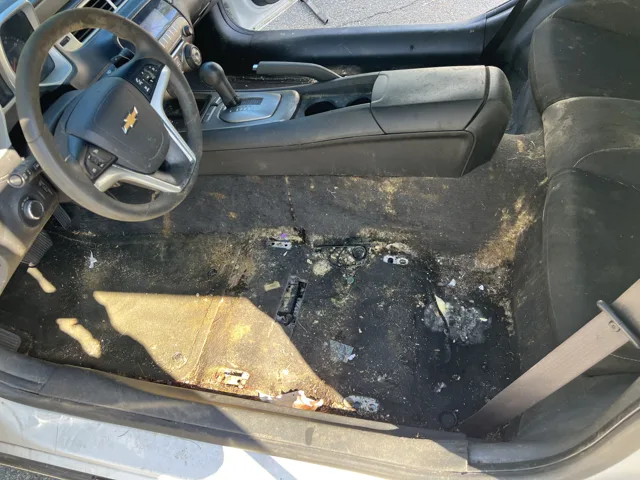
Why A Surface Check Has Limits
Feeling the exposed fibers is a useful observation, but it cannot establish the condition of an inaccessible underside. The EPA's mold investigation course identifies the underside of carpet and padding as possible hidden growth locations in buildings. The comparable question in a car is which floor layers actually became wet.
Readings, visual access, and the known wetting history should be considered together. A single reading from a mixed-material assembly should not be treated as a complete diagnosis.
Seat Removal Does Not Mean Carpet Removal
Removing a seat exposes mounting areas and more of the carpet surface. It may improve access, but the carpet can still cover the padding and floor pan. Photos of a seat-free interior therefore should not be described as proof that every layer was inspected.
Our interior floor access page distinguishes the areas shown. For an assessment, ask whether the proposed work includes access below the carpet, which layers are accessible, and whether photographs will document the actual findings.
Cleaning, Drying, Or Replacement?
The decision depends on contamination, material condition, and the water involved. A clean-water spill discovered promptly is a different situation from flood water or an unknown long-term leak. A material that cannot reasonably be cleaned and dried may need replacement rather than another surface treatment.
The EPA discusses this limitation for porous materials in its building cleanup guidance. For automotive work, manufacturer repair requirements and the condition of the specific carpet assembly should guide what can be retained.
When The Job Needs More Time And Access
Hidden wet padding, repeated odor after cleaning, or contamination extending across the floor can justify a deeper assessment. Seats and trim can involve restraint systems and electrical connections, so disassembly should follow the correct vehicle procedures rather than a generic online tutorial.
CarMold Boston can discuss mobile assessment first. When deeper interior access is needed, In-Shop Deep Remediation is a separate multi-day appointment in Pembroke, MA. The plan should also identify how the original water problem will be addressed.
Common Questions
Can Mold Be Hidden If The Carpet Looks Clean?
Yes, affected layers can be out of view. A clean-looking surface cannot confirm their condition, although moisture history and an inspection are needed before concluding that hidden mold is present.
Does Wet Padding Always Need Replacement?
Not automatically. The type of water, time wet, contamination, material construction, and manufacturer requirements affect whether cleaning and drying or replacement is appropriate.
Can I Lift The Carpet Myself?
Carpet access may involve trim, seats, wiring, and restraint-system connections. Use a qualified provider who can follow the service information for your vehicle.
Sources And Further Reading
General indoor mold guidance informs moisture and material principles. Vehicle-specific documents apply to the models they identify; inspection determines what applies to your car.